Some books teach you something new. The best ones hand you the words for something you already believed.
This is the second kind.
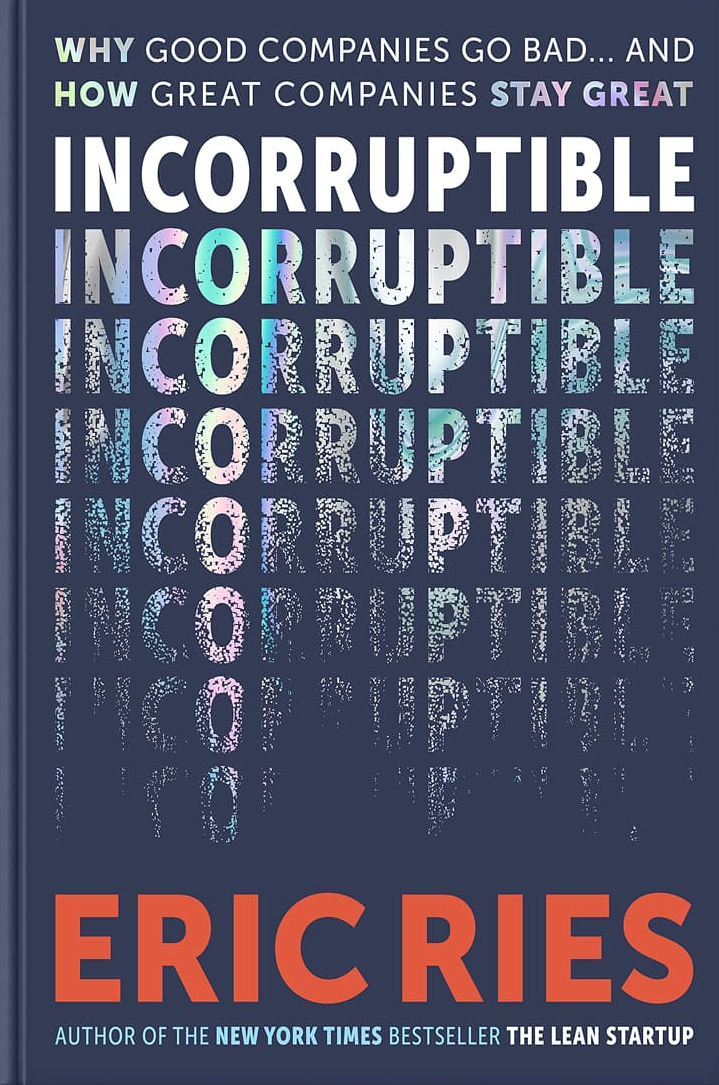
Incorruptible: Why Good Companies Go Bad by Eric Ries
For years I’ve built and advised companies around a single conviction. The only durable way to prosper is to create value – never to extract it from the customers and the teams who make a company work. I lean on value-based organizations and on holacracy: distributed ownership, decisions made by the people closest to them, a culture of lifting others up instead of hoarding what we know. And a healthy distrust of “best practices” – because best practices are too often how good companies quietly drift into mediocrity.
What I never had was a clean name for the thing all of it points at.
Eric Ries gives it one. He calls it human flourishing.
What is profit, really?
Here is the move that reframes the whole view of running the businesses. Profit is not revenue minus costs. Profit is the surplus of human flourishing a company leaves behind – for its customers, its people, and the world it works in.
To make a profit is to maximise human flourishing. It just means that you left the world better off than you found it, and you gained some profit for yourself in the process.
Test it against your gut. A Ponzi scheme makes money. Nobody calls it profitable. A company that poisons a river, or poisons its own customers, makes money too – but that’s closer to theft than to value creation.
Money is not the proof. The flourishing left behind is.
Corruption is a design problem, not a character flaw
What lifts this above a moral lecture is the diagnosis. Ries doesn’t reach for bad apples. He names the gravity – the relentless pull of short-term finance that drags even great founders into the meat grinder.
Good people. Strong missions. And the structure still bends them.
The more golden the goose, the stronger the temptation to butcher it.
That’s the trap in one line. The more value you create, the more worth extracting it becomes – to an activist investor, a banker, a lawyer, the next quarter. Success isn’t the reward. Success is what paints the target.
So the fix is structural too. Ries calls it the mission-controlled organization: a company built with enough integrity in its architecture to resist capture. Costco’s governance fortress. Patagonia’s ownership structure. Not slogans on a wall.
Why it landed for me
I spent years insisting that idealism and performance aren’t a trade-off. That you don’t have to choose between doing right and doing well. It’s a lonely argument to make in a board meeting.
This is the rare book that proves we weren’t crazy.
It works as a moral compass. It works as a practical playbook. And it gives the conviction a name you can carry into a room and put on the table.
Read it if
You care about building something worth protecting. That’s the whole filter.
It rallies the people already ready to challenge the status quo – not the ones defending it. If that’s you, this one’s worth your weekend.